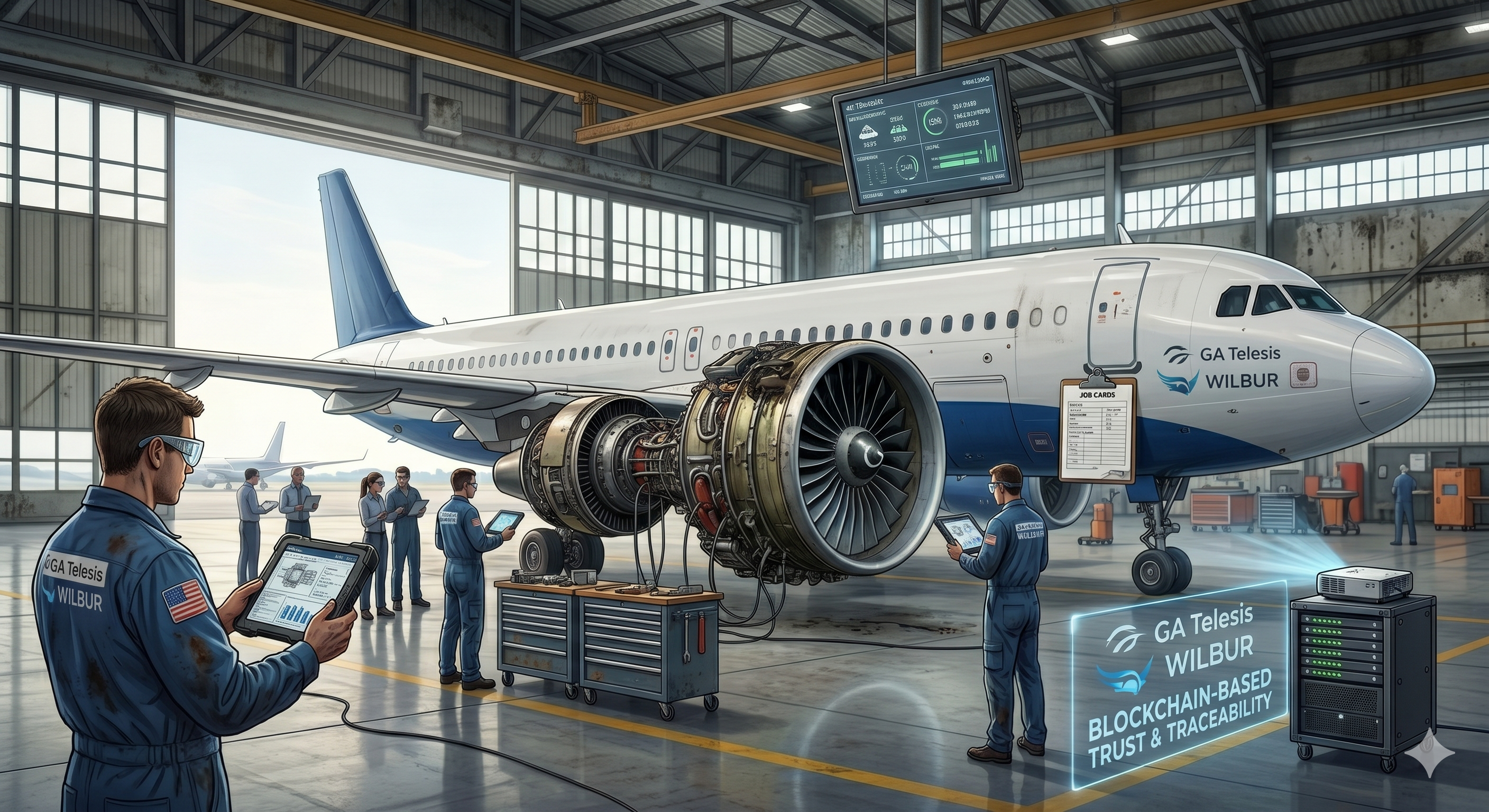
Aircraft maintenance is one of the most critical functions in aviation, yet it continues to rely on systems that were never designed for the scale and complexity of today's global MRO and aftermarket operations. The industry is operating next-generation aircraft on legacy data infrastructure, which is causing a disconnect that is obsolete and no longer sustainable.
Across airlines, lessors, MROs and aftermarket suppliers, maintenance data remains fragmented, manually reconciled, and difficult to trust in real time. The result is predictable and translates into slower decisions, prolonged aircraft-on-ground events, expensive lease transitions, and unnecessary operational risk. The industry does not have just a data problem. It has a trust problem. From my perspective as a tech leader in the aerospace community, this is the most important shift aviation needs to make in the next 5 years.
At GA Telesis, we are addressing this challenge head on. This was not approached as a technology development undertaking, but as a fundamental shift in how aviation data is created, trusted, used and preserved. It began with a clear, long-term vision from our founder and CEO Abdol Moabery, who recognized early that aircraft maintenance would require a trusted digital backbone for lifecycle data. That vision was formalized through patent work even before our software development work began.
From there, in line with our founder's vision, we made a deliberate decision to move beyond incremental improvements and build a new digital infrastructure layer for the industry. That decision led to WILBUR™, the Worldwide Integrated Lifecycle and Blockchain Unified Registry (wilbur.aero).
WILBUR™ is not another aviation software platform. It is how GA Telesis is actively building a single, verifiable source of truth from birth, or midlife, for aircraft, engines, and components across their entire lifecycle using blockchain and Web3 technologies. This is how we move aircraft maintenance from fragmented record keeping to real-time, trusted intelligence. By the sounds of the feedback we have already received, we are single handedly creating the future of trace and provenance.
Why GA Telesis Is Rebuilding the Digital Foundation of Aircraft Maintenance
The aviation industry has spent decades optimizing physical operations while underinvesting in digital infrastructure. Maintenance processes evolved through necessity rather than design, resulting in disconnected systems and inconsistent data standards. At GA Telesis, we see this gap clearly across the lifecycle of every asset and part we manage.
A single aircraft component can have its lifecycle history distributed across multiple organizations, each maintaining its own version of the record. This creates delays in verification, inefficiencies in maintenance workflow verification, trace inconsistencies, and unnecessary risk in decision-making.
Industry leaders have acknowledged the need for change. The International Air Transport Association, IATA, emphasizes full lifecycle traceability in a publication entitled Guidance Material and Best Practices for Life-Limited Parts (LLPs) Traceability. IATA also outlines the shift toward digital operations in a different publication in detail which was published as Guidance Material for the Implementation of Paperless Aircraft Operations in Technical Operations In parallel, the newly established Aviation Supply Chain Integrity Coalition, ASCIC, is driving industry alignment around vendor accreditation, document traceability, and verification. As always, the Aviation Suppliers Association (ASA) is also leading the way with their aftermarket verification audits and plans to support the WILBUR™ initiative.
At GA Telesis, we are not just aligning with these initiatives. We are building the infrastructure and global network of industry validation required to make them operational at scale.
Solving the Core Problem: Fragmented Data and Lack of Trust
The biggest inefficiency in aircraft maintenance is not the lack of data. It is the lack of organization and trust in that data. We see this every day in real operations. Maintenance teams spend time verifying records instead of acting on them. Lease transitions slow down to months and years because documentation must be reconciled across multiple sources. Engineers and technicians are forced to validate information manually before making decisions.
This results in:
- Delays in provenance verification
- Increased risk of unapproved or counterfeit parts
- Manual, time-consuming compliance processes
- Inefficient lease return and aircraft sale transfer workflows
- Slower response during critical maintenance events
At GA Telesis, we designed WILBUR™ specifically to eliminate these inefficiencies by embedding trust directly into the data layer.
How GA Telesis Uses WILBUR™ to Transform Aircraft Lifecycle Management
WILBUR™ is not theoretical. It is how GA Telesis is actively transforming aircraft maintenance workflows today by following the steps below.
1) Integrating Aviation ERP Systems into a Unified Data Layer
We integrate WILBUR™ directly with existing ERP and maintenance systems through a WILBUR™ Connector Agent, an integration platform that connects with aviation industry players' ERP systems in four major ways including message queuing, using webhooks, API polling or using database outbox patterns.
This allows WILBUR™ to capture lifecycle data at the source without disrupting existing operations. Instead of replacing systems, we unify them into a trusted, interoperable framework backbone.
2) Capturing Real-Time Maintenance Events
WILBUR™ records key lifecycle events such as installation, removal, inspection, sale, lease, repair, AD incorporation, and overhaul in real time. These events are linked into a continuous, verifiable history.
This changes how maintenance decisions are made. Teams no longer wait to validate records. They operate with immediate confidence in the data.
3) Creating Digital Twins for Aircraft Components
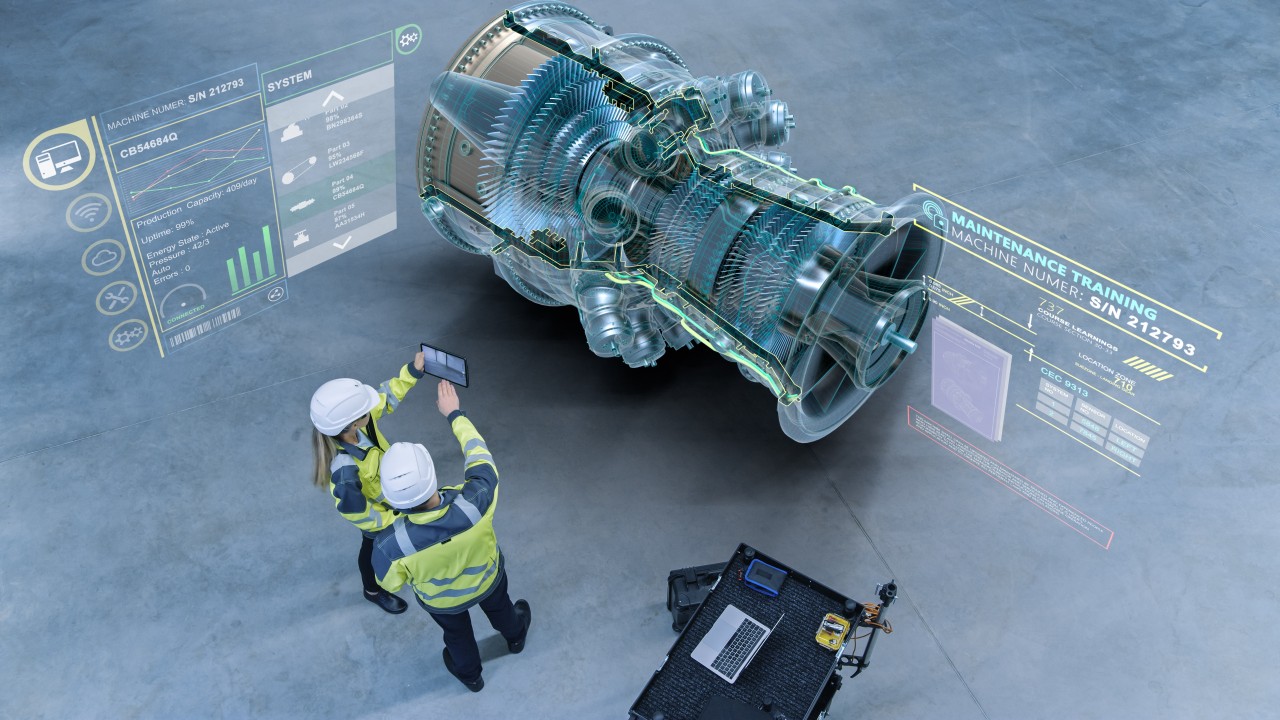
We create a digital twin for each tracked component, representing its complete lifecycle. These digital twins include:
- Provenance and ownership history
- Certifications and compliance documentation
- Maintenance and repair records
- Supporting operational data
- Sale and transfer history
- Installation records past and present
- Aircraft and engine parts hierarchy
This makes lifecycle traceability actionable and directly usable in maintenance, compliance, aftermarket management, lease management, and asset management workflows. But one of the largest winners overall in this transformation will be that of asset value retention. Banks, lessors and airlines will all see dramatic gains in overall asset values through WILBUR™ digital twins.
4) Embedding Trust Through Blockchain Technology
We use blockchain to ensure that lifecycle data is immutable and fully traceable. This fundamentally changes how trust is established in aviation. Instead of verifying data after the fact, trust is built into the system from the beginning.
This directly supports industry priorities around document traceability and verification, including those outlined by the Aviation Supply Chain Integrity Coalition.
Delivering Real Operational Impact Across The Aviation Sector
This is where transformation becomes tangible. At GA Telesis, we are fully focused on driving this approach across global operations. We expect an immediate impact to be created by aviation industry players in many areas through the utilization of WILBUR™:
- Lease returns will be accelerated to minutes not months since records can be verified faster
- Aircraft-on-ground time will be reduced through quicker decision-making and records trust
- Asset values will be significantly strengthened through verified lifecycle history
- Maintenance teams will spend less time validating data and more time executing
- Supply chain integrity will improve through better traceability and verification
This is what it means for GA Telesis to move from incremental improvement to real transformation.
How GA Telesis Is Executing This Vision
Execution is where most innovation efforts fail. We structured WILBUR™ differently from the start. GA Telesis' integrated business units perform all functions in the aviation industry outside of manufacturing and flying the plane itself. Our world-class software engineering team works directly with all of GA Telesis' business unit leaders and technicians directly. This made us the best suited organization to create such a disruptor, we have the experience in all areas to build the solution. That knowledge allows us to validate technology decisions in real time against operational reality. We are not building in isolation, we are building within the business, and this is one of the key differentiators for GA Telesis.
This approach ensures we stay focused on solving the right problems. Equally important is the role of leadership. Our CEO's vision, backed by early patent development, established a clear strategic direction before development began. The executive team and board have reinforced that direction by enabling long-term investment in WILBUR™ research and development. This has allowed GA Telesis to:
- Build a highly specialized and experienced software development and data science teams
- Collaborate with impactful external industry partners
- Deploy WILBUR™ internally across operations
- Engage airline partners as potential beta clients
This combination of vision, execution, and support is what allows us to move from concept to real industry impact.
The Future of Aircraft Maintenance, Built by GA Telesis
Aircraft maintenance is moving toward a new operating model where data is real-time, trusted, and shared across stakeholders. At GA Telesis, we are actively building that future and WILBUR™ is an important first step.
We are enabling a model where every component has a digital twin, every lifecycle event is captured and verified, and every stakeholder operates from a shared source of truth. This is not an incremental evolution; it is a structural shift in how aviation operates.
Conclusion
The aviation industry has reached the limits of legacy maintenance systems. The next phase requires a new digital foundation, one that eliminates fragmentation, embeds trust, and enables real-time decision-making.
Aircraft maintenance will not be defined by better documentation. It will be defined by trusted data and intelligent systems. That transformation is already underway. At GA Telesis, we are building that foundation through WILBUR™. By combining blockchain, digital twins, and deep integration with existing systems, we are transforming how aircraft lifecycle management is executed in practice. Stay tuned for exciting updates on WILBUR™ throughout 2026 and 2027. For more details, visit the WILBUR™ website at www.wilbur.aero and follow the GA Telesis LinkedIn Page for important business updates.